
McPherson M30G Air Curtain Burner FAQ
Setup, operation, safety and maintenance answers for the McPherson Systems M30G air curtain burner. See the M30G for specifications and machines available now.
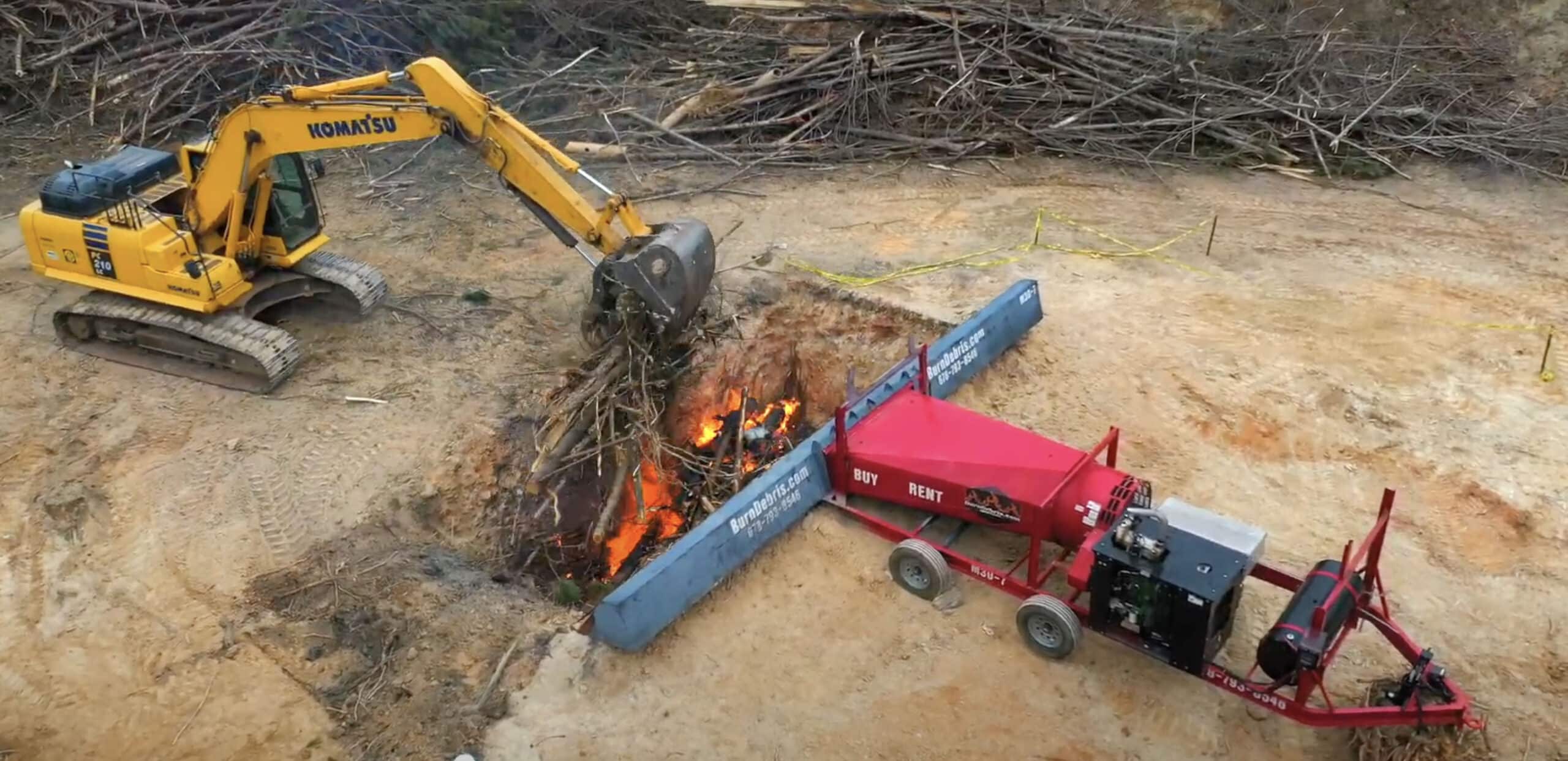
47 questions in 1 section. Section 1 is open; select any question to read its answer.
1
Section 1 · Questions 1–47
McPherson M30G Operation and Maintenance
47 questions
McPherson M30G Operation and Maintenance
1
Who is the manufacturer of the M30G Air Curtain Destructor?
McPherson Systems, Inc., located in Tifton, Georgia (phone: 229-386-2367).
2
What should be done with the operator's manual if the machine is sold?
The manual is considered a permanent part of the machine and should remain with the machine if sold.
3
What warning is given regarding operating the machine before reading the manual?
Caution: Read the Owner's Manual before operating the machine; do not start the machine unless you understand the instructions, as failure to do so could result in personal injury and/or equipment and property damage.
4
How does the McPherson Systems Air Curtain Destructor function?
It creates and maintains a uniform curtain of air across the top of the pit in which burning occurs, prohibiting smoke from escaping and increasing oxygen to the fire for faster and more complete combustion.
5
What are the typical operating temperatures inside the pit during burning?
Operating temperatures in the pit run between 1800°F and 2200°F.
6
Why are tractor or forklift tire stops not required for the refractory lined pit burner?
Because the pit is constructed above ground level.
7
What types of waste materials are designed to be burned in the destructor?
All non-treated wastes.
8
What weather conditions are considered unsuitable for operating the machine?
Rain, low clouds, or strong wind gusts are not suitable conditions for burning; the machine can only be operated properly when the weather is clear.
9
What action should be taken if sudden wind gusts occur during operation?
Stop loading the pit and allow the machine to continue operating until the existing fire has burned down.
10
What is the recommended trench length according to the M30G set-up diagram?
30 feet.
11
What is the recommended pit depth for the M30G setup?
10 feet or greater depth.
12
What is the standard width of the dirt trench for the M30G, and how can local law affect it?
The standard width is 9 feet, but it may be 8 feet in some areas depending on local laws.
13
From which location should material to be burned be loaded into the trench?
Material to be burned is loaded into the dirt trench from the side opposite the air manifold.
14
How full should a cold pit be loaded before ignition?
Load the pit 1/2 full with waste.
15
How much accelerant is used for initial lighting in a cold pit, and where should it be placed?
Douse the waste with 1 pint of fuel oil or diesel fuel, putting the majority of the oil on the waste at the front center side of the trench.
16
What types of ignition accelerants are strictly prohibited?
Highly volatile solvents such as mineral spirits, gasoline, etc., must not be used for ignition.
17
What regulatory check is advised before using accelerants?
Call your local EPA office for clarification, as some states do not allow the use of accelerants.
18
When should air from the fan first be introduced during a cold start?
Allow sufficient time for the fire to take hold before introducing any air from the air supply.
19
At what engine speed and duration should the unit run once the fan clutch is engaged after initial fire take-hold?
Increase engine speed to approximately 1100 RPM until ignition is uniform across the pit (usually 10 to 15 minutes).
20
What is the maximum height to which material can be loaded relative to the air curtain?
Ensure that no material protrudes above the air curtain when loading the pit.
21
What is the target engine operating speed during continuous burning?
Engine speed can be increased up to 2000 RPM.
22
What cold start steps can be omitted if hot coals remain from the previous day's burn?
Steps 2 and 3 (adding fuel oil/diesel and initial torch lighting) can be omitted.
23
How does starting a fire with existing coals differ regarding fan air introduction?
When lighting coals left from burning the previous day, it is necessary to introduce air from the fan before burning can start.
24
What must be done with the clutch lever before starting the diesel engine?
Disengage the clutch lever.
25
What engine condition must be met before the diesel engine will start?
The engine will start after the oil pressure level has risen to the proper operating level.
26
How is the fan clutch engaged on the unit?
Push the clutch lever forward/inward to engage the clutch.
27
How is engine throttle speed adjusted on the electronic control panel?
Using the throttle adjustment buttons: the up arrow increases throttle and the down arrow decreases throttle.
28
What is the contact phone number listed on the Flint Power Systems control panel?
1-800-821-4025.
29
What is the step-by-step procedure to shut down the diesel engine?
1. Disengage the clutch lever; 2. Reduce engine speed to 800 RPM; 3. Maintain 800 RPM for several minutes to allow the engine to cool; 4. Switch the ignition key to the OFF position.
30
How far in advance of shutdown should waste loading cease?
Stop loading the pit with material approximately 2 hours before shutdown is desired.
31
Why must the main fan keep running after loading stops during shutdown?
The main fan must remain running to allow remaining material in the pit to burn down completely.
32
When should the air supply be switched off during shutdown?
Turn off the air supply when the fire inside the pit has completely burned out.
33
What is the maximum allowable ash buildup in the pit?
Ashes should not build up higher than 1/3 of the pit depth or to the point where they impede combustion and blow out of the pit, whichever occurs first.
34
How should ashes be conditioned prior to removal from the pit?
Saturate the ashes with water for cooling and dust control.
35
How should excavated ashes be handled after removal to ensure total cooling?
Spread them out approximately 6 to 12 inches deep to allow total cooling before proper disposal.
36
Which components require daily lubrication?
The two (2) main fan bearings.
37
Which components require weekly lubrication?
The one (1) idler arm bushing and designated weekly drive points.
38
When should the door hinges be greased on the M30G?
Hinges should be greased before the doors are opened.
39
What is the standard warranty period for the McPherson Systems pit burner?
One year, beginning from the date of sale of the pit burner by McPherson Systems, Inc.
40
What specific items are excluded from warranty coverage?
Drive belts and routine service items.
41
What are McPherson Systems' responsibilities under a warrantable failure?
McPherson Systems will furnish all parts and labor needed to repair damage resulting from a warrantable failure.
42
What must an owner do before the warranty expires to make a claim?
Notify McPherson Systems, Inc. of any warrantable failure and have the failure repaired by an official warranty facility.
43
Who is responsible for the cost of maintenance items replaced during warranty repairs?
The owner is responsible, unless such items are not reusable due to the warrantable failure.
44
Who pays for communication and freight costs related to warranty service?
The owner is responsible for communication expenses and similar costs; all warrantable items are F.O.B. Tifton, Georgia.
45
Does the warranty cover downtime, cargo damage, or incidental/consequential losses?
No, the owner is responsible for non-product repairs, downtime expenses, cargo damage, and all business costs; McPherson Systems is not responsible for incidental or consequential damages.
46
What condition voids the factory warranty?
The warranty is void and nonbinding if the product is determined to have been modified so as to alter its operating characteristics.
47
How are third-party components not manufactured by McPherson Systems warranted?
They are subject to the warranty terms imposed by the original manufacturer of each respective component.
No questions match your search.